Klingbrief Archive

Vol 139 - February 2026

Article

Of Note: The Common Project

The Battle for Future Book Lovers by Carl Wilkinson
The Financial Times, December 13, 2025

Kids Rarely Read Whole Books Anymore, Even in English by Dana Goldstein
New York Times, December 12, 2025

Dana Goldstein of The New York Times and Carl Wilkinson of The Financial Times recently sounded a familiar alarm: young people are not reading the way they used to. Citing data from two different surveys – one from the UK’s National Literacy Trust, which found a 20% decrease in children who said that they enjoy reading when they have free time, and one from  The New York Times, which surveyed 2000 educators, parents, and students about their changing experiences with high school reading – Goldstein and Wilkinson contribute valuable new insights into the reasons behind the known shift in children’s reading behaviors. Beyond the influence of social media on children’s attention and use of time, there are additional adult-forged realities at play, such as instructional practices that encourage assigning short fictional works and book excerpts rather than whole novels in schools. Both Wilkinson and Goldstein argue that adults must do better when it comes to teaching children to love to read, protecting time for them to use for reading, and giving them real freedom in choosing what they read. Wilkinson quotes children’s book author Katherine Rundell, who advises that “adults worried about their child reading books they might think are too young for them or unchallenging” should instead “let them associate books with delight.” For her part, Goldstein quotes Dr. John White, chief executive of Great Minds and Bookworms, who argues that as children get older, they actually need to read for different reasons including debating ideas and building community through reading with others, what he calls “the common project of engaging other young people in a conversation about a book that is open to multiple interpretations.” It could be that along with so many other things, the definition of reading for pleasure will need to be re-conceived in the new year.
Submitted by
Jessica Flaxman, The Pingry School, Basking Ridge, NJ
Teaching Practice
Article

To Those From Whom We Have Learned

Postplagiarism: Understanding the Difference Between Referencing and Giving Attribution by Sarah Elaine Eaton
Postplagiarism.com, September 5, 2025

Sarah Elaine Eaton has become a go-to thinker for navigating the messiness of the new age of knowledge production and learning ushered in by the arrival of generative AI technologies. Her most recent article, “Postplagiarism: Understanding the Difference Between Referencing and Giving Attribution,” once again charts an important shift in how we teach students about research, metacognition, and developing ideas. What’s most refreshing about Eaton’s wider work can be found in this article, as she manages to articulate and defend a coherent set of academic values even as the ground shifts beneath our feet. Eaton’s article begins with the claim “that attribution remains vital even as definitions of plagiarism evolve,” arguing that “the need to recognize and pay respect to those from whom we have learned remains constant.” Following this claim, Eaton argues that attribution, rather than citation, is the operative framework for reflection on AI. Because “attribution requires meta-cognitive awareness and evaluative judgement,” it moves students “from a defensive practice (avoiding plagiarism accusations) to an affirmative one (acknowledging the intellectual debt we owe to others who have generously shared their knowledge with us).” More broadly, Eaton’s clear-eyed disentangling of attribution and citation puts student learning at the center of our work in the classroom, asking them to consider how they know what they know and the origins of their ideas and thinking. In other words, in our post-plagiarism moment, developing the skills of attribution offers students deeper context and reflection for the process of learning with, through, and about technology, media, and research.

Submitted by
Jonathan Gold, Moses Brown School, Providence, RI
Teaching Practice
Technology
Book

A 360-Degree Roadmap

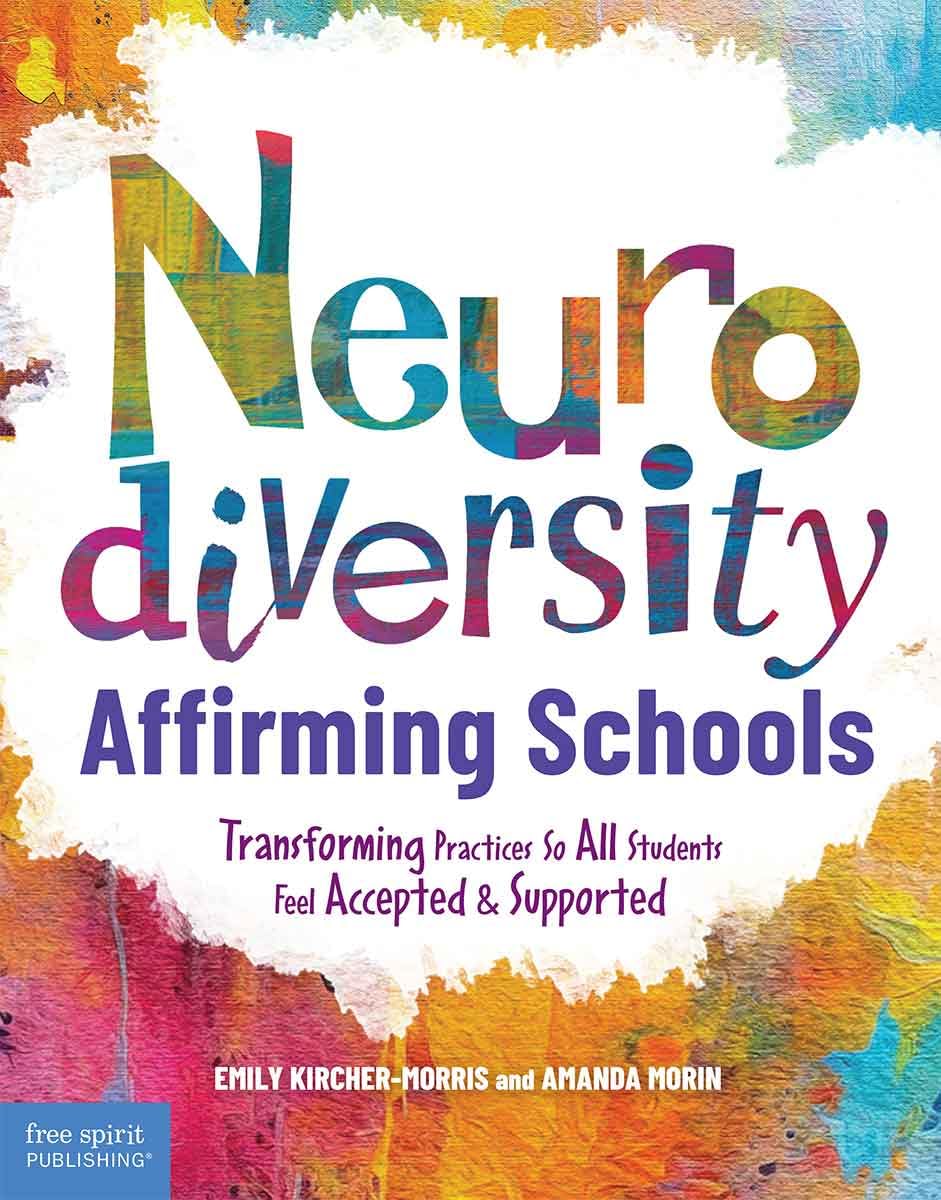
Neurodiversity-Affirming Schools: Transforming Practices So All Students Feel Accepted & Supported by Emily Kircher-Morris and Amanda Morin
Free Spirit Publishing, January 21, 2024

Supporting Neurodivergent Teachers: How Schools Can Help the Helpers by Emily Kircher-Morris
Cult of Pedagogy, November 23, 2025

As the presence of neurodiverse profiles in our learning spaces continues to grow, there is a critical need for schools to create genuine communities of belonging and support for all neurodivergent thinkers. Together, the book Neurodiversity-Affirming Schools and Emily Kircher-Morris’s article “Supporting Neurodivergent Teachers: How Schools Can Help the Helpers” offer a comprehensive, 360-degree roadmap for transforming the educational ecosystem for both students and educators. In Neurodiversity-Affirming Schools, authors Kircher-Morris and Morin provide a much-needed bridge between theory and practice. This book honors the professionalism of educators while striving to fill in gaps of knowledge about neurodiversity through a lens that affirms all learners. The authors don’t shy away from the hard truths — acknowledging how neurodivergent students have historically been ignored or even harmed in traditional classrooms — but focus on specific, actionable ways to do better. Kircher-Morris also extends this lens to a frequently overlooked group: neurodivergent educators. In her Cult of Pedagogy article on "Helping the Helpers," she challenges school leaders to apply the same accessibility standards to staff that they do to students. She highlights how many teachers only recognize their own neurodivergence later in life, despite being trained to spot those same traits in their students. By shifting school structures to normalize neurodiversity among staff, administrators can tap into the unique strengths these educators bring while mitigating the systemic challenges that lead to burnout. Overall, these works emphasize that reimagining school structures through a neurodiversity-affirming lens helps leaders foster healthier, more sustainable teaching communities where both educators and students thrive.

Submitted by
Rachel Donnelley Smith, The de Paul School, Louisville, KY, and Sarah Jeanne Shimer, Berwick Academy, South Berwick, ME
Science of Learning
Teaching Practice
Leadership Practice
Book

Risks, Safeguards, Black Boxes, and Virtue

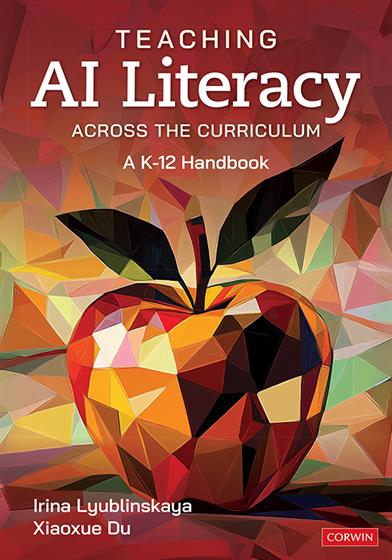
Teaching AI Literacy Across the Curriculum: A K-12 Handbook by Lyublinskaya, Irina.; Du, Xiaoxue.
Thousand Oaks : Corwin Press, July 28, 2025

The integration of artificial intelligence into K-12 education raises significant ethical considerations that extend beyond technical implementation. As highlighted in Teaching AI Literacy Across the Curriculum, ethical AI use requires deliberate attention to issues of bias, privacy, transparency, equity, and student agency. AI systems trained on historical or incomplete data risk reproducing existing social inequalities, particularly in areas such as grading, placement, and personalized learning. Without critical oversight, these tools may disadvantage students from underrepresented or marginalized backgrounds, as well as risk moral injury for educators when institutional practices conflict with professional judgment. Student data privacy is another central concern. AI-driven platforms often collect sensitive behavioral and academic data, creating risks related to misuse, surveillance, and loss of trust if safeguards are insufficient. The lack of transparency in many AI systems further complicates ethical implementation, as “black box” decision-making can obscure how judgments affecting students’ educational trajectories are made. The authors emphasize that AI literacy is essential for addressing these challenges. By equipping teachers and students to critically evaluate AI systems, schools can promote responsible and equitable use of technology grounded in a virtue ethic that prioritizes fairness, care, and professional responsibility in an increasingly AI-driven educational landscape.

Submitted by
Dr. Zohreh Janinezhad, Hawken School, Gate Mills, OH
Leadership Practice
Teaching Practice
Technology
Book

The Humanity of Every Child

Original Sins by Eve Ewing
Penguin Random House, February 11, 2025

Throughout Original Sins: The Miseducation of Black and Native Children and the Construction of American Racism, Dr. Eve L. Ewing argues that school has historically functioned as a "laboratory for honing racial hierarchy." A writer and professor at the University of Chicago, Ewing takes her readers through the foundations of the American education system’s design to subjugate Black and Native children. Ewing builds her argument around the three pillars of hierarchy, which schools have used to reinforce racial hierarchy. These include the Gospel of Intellectual Inferiority, which is the assumption that Black and Native children are inherently less intelligent; Discipline and Punishment or the manifestation of the concept that Black and Native bodies require more content, with disproportionate suspension rates and criminalization; and Economic Subjugation emphasizing docility over ambition to utilize school as a tool to prepare children of color for the bottom of the capitalist hierarchy. Specific examples of the nineteenth century boarding school system and white abolitionists’ explicit teaching of subservience during Reconstruction serve as potent support for Ewing’s argument. The culmination of Ewing’s work is an urgent call for modern educators and leaders, contrasting the oppressive structures of the past with stories of resistance. For independent schools, Ewing challenges educators to address the "uncomfortable truths" embedded in our institutional DNA. Change, as Ewing suggests, requires us to stop waiting for permission from those in power and instead to start building "community-led, learning-centered education" that celebrates the humanity of every child.

Submitted by
Tessa Steinert Evoy, Charles River School, Dover, MA
Leadership Practice
DEIJ
Book

Where Meaningful Human Learning Can Occur

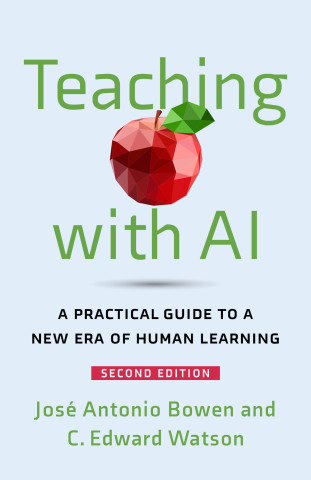
Teaching with AI: A Practical Guide to a New Era of Human Learning (Second Edition) by José Antonio Bowen and C. Edward Watson
Johns Hopkins University Press, December 2, 2025

“Teaching with AI is not about replacing human learning, but about redesigning learning so that human judgment matters more, not less,” write José Antonio Bowen and C. Edward Watson in Teaching with AI: A Practical Guide to a New Era of Human Learning. Bowen and Watson astutely point out that instead of approaching AI as a crisis that needs to be managed, the emphasis should be put on prioritizing authentic, visible learning in the classroom. They suggest that contrary to popular belief, AI has not introduced new problems to the world of education. Instead, it has made several long-standing issues even harder to ignore. These problems include unclear learning goals, assignments that favor product over process, and assessments that generally equate excellent grades with understanding. Throughout the book, Bowen and Watson offer practical guidance for redesigning courses and assessments in ways that value process and transfer. Grounded in the perspective of experienced educators, Teaching with AI ultimately reads less as a manual for managing new technologies and more as an invitation to teachers and school leaders to move beyond policing tools and toward designing learning environments where meaningful human learning can occur.

Submitted by
Alice Wang, Riverdale Country School, Bronx, New York
Teaching Practice
Technology
Book

A Set of Choices

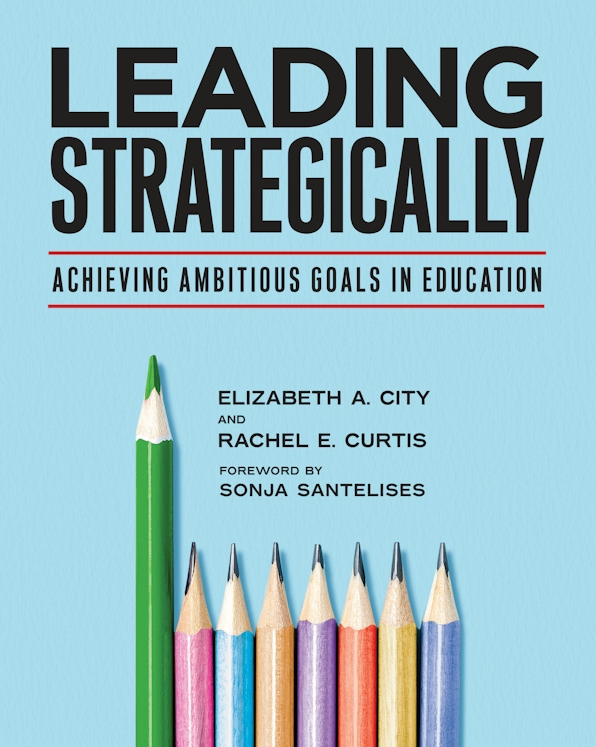
Leading Strategically: Achieving Ambitious Goals in Education by Elizabeth A. City and Rachel E. Curtis
Harvard Education Press, August 19, 2025

Leading Strategically is a steady, practical book for leaders trying to move a school from good intentions to measurable progress. What stands out is the authors’ emphasis on strategy, not as a longer to-do list, but as a set of choices. They push leaders to name a small number of priorities, align time and resources to those priorities, and make peace with the reality that focus requires saying no. In independent and international schools, where programs can multiply quickly and every initiative has a constituency, that clarity is both hard to come by and overdue. The book also recognizes that schools are communities, not systems you can “optimize” from a distance. Strategy only works when people understand the why, trust the process, and see how decisions connect to the school’s mission. Often, leadership teams share a vision but lack a shared method for deciding what comes first, what can wait, and what should stop. Santelises’ foreword adds weight and realism, reminding readers that strategic discipline matters most during constraint and transition. This is a strong resource for heads, division leaders, and leadership teams who want to replace initiative fatigue with coherent, sustainable direction.

Submitted by
Brandon McNeice, Cornerstone Christian Academy, Philadelphia, PA
Leadership Practice