Klingbrief Archive

Vol 141 - April 2026

Book

Of Note: A Comparable Inflection Point

Fixing Fairness: 4 Tenets to Transform Diversity Backlash into Progress for All by Lily Zheng
Berrett-Koehler Publishers, January 13, 2026

There are few corporate blunders as striking as Kodak’s failure to capitalize on digital photography, a technology it invented. Its decline was not due to a lack of foresight but a reluctance to realign its identity, incentives, and strategy, ultimately leading to its irrelevance and 2012 bankruptcy. Independent schools today face a different type of disruption, one that is social, political, and demographic rather than technological. Amid enrollment pressures and shifting expectations, DEI efforts are being repositioned. The risk schools face is underestimating how deeply students and families expect belonging, identity affirmation, and intercultural competence to be embedded in school life. Lily Zheng, in Fixing Fairness, contends that organizations do not fail because they reject DEI, but because their approach is performative and without consistency or measurable outcomes. Zheng offers a compelling path forward and suggests a shift toward building accountable systems, sustaining collaboration, and fostering environments where inclusion and belonging are demonstrable. There is no magic bullet. Kodak missed the future because it refused to reorganize around it. Schools now face a comparable inflection point. Zheng offers a reframed approach for our schools to meaningfully integrate inclusion and belonging into their core mission. The difference will not merely determine their survival, but their long-term relevance.
Submitted by
Tracey Goodson Barrett, Gill St. Bernard's School, Gladstone, NJ
DEIJ
Leadership Practice
Book

Design for Deeper Attentiveness

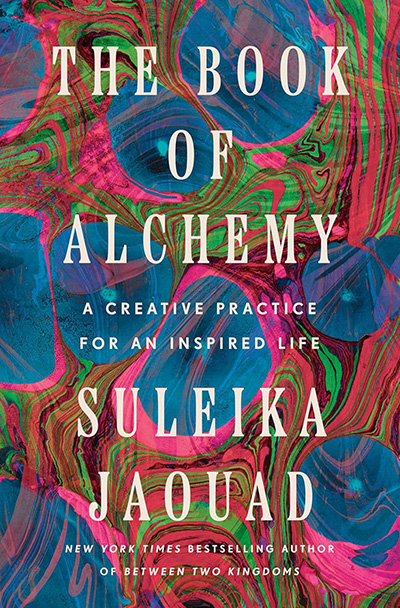
The Book of Alchemy: A Creative Practice for an Inspired Life by Suleika Jaouad
Random House, April 22, 2025

Reflective practice is formative. Long understood as central to professional learning, it shapes what educators are able to notice, discern, and do. For Donald Schön, it is the capacity to think in and on action. For John Dewey, it bridges experience and learning. For Rita Charon, it deepens professional judgment and relational awareness. As educators face increasing complexity, reflection can feel out of reach, yet it is deeply essential. Suleika Jaouad’s The Book of Alchemy offers creative ways to support and sustain reflective practice. It gathers 101 essays, organized around themes like memory, fear, and rebuilding. Though not written for educators specifically, the book offers a compelling model when read through the lens of professional learning. Like Jaouad’s Substack, The Isolation Journals, The Book of Alchemy extends journaling and reflection beyond solitude into a shared, generative endeavor. In this, the book invites reflection not only as a personal habit, but also as a collective practice. Journaling becomes reflective infrastructure through which readers surface insight, interpret experience, and respond collectively to complexity. The Book of Alchemy is not only about journaling—powerful in its own right. It is about designing for deeper attentiveness. It has the potential to inspire educators to (re)commit to practices of reflection—individually and collectively. Where might reflection live more intentionally in the rhythms of a school? What might shift if it were treated as infrastructure for learning, teaching, and leading? How might reflective practice—through journaling or otherwise—become a form of institutional attentiveness, helping communities sense what is emerging, build shared understanding, and guide action? 

Submitted by
Nicole Brittingham Furlonge, Klingenstein Center, Teachers College, Columbia University, New York, NY
Creativity
Science of Learning
Leadership Practice
Book

Double-Edged

Mattering: The Secret to a Life of Deep Connection and Purpose by Jennifer Breheney Wallace
Penguin Random House, January 27, 2026

“Mattering is double-edged – powerful when we feel it and destructive when we don’t.” In the classroom as in other spaces where we live and learn, human thriving depends not just on what we can know, accomplish, and achieve, but on how we understand our impact on and relationship to others. In an era of increasing disconnect, Jennifer Breheney Wallace’s Mattering: The Secret to a Life of Deep Connection and Purpose argues for an urgent rediscovery of our “Mattering Core” – of how we are needed as well as what we need. While not explicitly directed at educators, the book’s message resonates with questions facing students (and teachers!) on a daily basis: Where can I contribute? What is my purpose? Wallace’s 2023 book, Never Enough, counseled parents and others about the dangers of an increasingly pressured academic journey and proposed mattering as one way forward. This new work extends and deepens that conclusion through interviews and research illustrating how feeling that we are valued by others can serve as a “protective shield.” Even as Wallace expands her focus across life stages and contexts, her stories about shaping resilience through trust, building deeper relationships, and attunement to the needs of others serve as provocations and invitations that matter deeply for the way we teach and learn.

Submitted by
Jessie Dubreuil, The Nueva School, San Mateo, CA
Social-Emotional Learning
Student Wellness & Safety
Teaching Practice
Article

Ways of Knowing

The real truth about stories: Book recommendations from the Indigenous Literatures Lab by Jennifer Brant, Erenna Morrison, Gayatri Thakor, Jasmine Rice, and Miyopin Cheechoo
The Conversation (Canada Edition), March 26, 2026

“Indian or pretendian?” This provocative question points to what is more formally described as Indigenous identity fraud, in which individuals claim First Nations, Métis, or Inuit ancestry or affiliation — sometimes deliberately and sometimes based on long-held but mistaken understandings of family history. Such claims can confer professional or cultural authority, access to roles intended for Indigenous people, and opportunities to represent communities to which one does not belong. “The real truth about stories” situates itself within these debates while moving beyond individual cases to examine how Indigenous voices are selected and taught. In doing so, it turns to Thomas King as an example. His work has often served as an entry point for non-Indigenous readers. The question, however, is not simply who is included, but why certain texts become dominant. The authors argue that replacing one text with another is insufficient. Instead, they call for greater attention to works that “dispel settler myths about Indigeneity” and reflect more complex Indigenous ways of knowing. They also invite educators to consider how accessibility, audience, political context, and narrative style shape what is taught. For secondary and post-secondary teachers, the article offers both practical resources and a clear challenge: to rethink not just which texts are selected, but how they are framed within a more critical, decolonizing approach to literature.

Submitted by
Wayne Burnett, AIS Abuja, Nigeria
Curriculum
Teaching Practice
DEIJ
Book

Mission Statements, Lived Daily

Equity and Inclusion through Policy and Practice by Farhana Loonat
Bloomsbury Academic, January 8, 2026

It has become an ongoing challenge to meaningfully embed diversity, equity, and inclusion practices across educational settings, particularly in international schools. While many institutions name these values in their mission statements, they often struggle to live them daily or implement lasting policies that create truly inclusive systems. In Equity and Inclusion through Policy and Practice, Farhana Loonat offers an honest and critical examination of historically white institutions, highlighting systemic inequities such as disproportionate workloads for faculty of color, biases in tenure decisions, discrimination tied to emotional expression and accents, and inequities in faculty contracts. Moreover, Loonat moves beyond critique to offer urgent, concrete, and practical recommendations for addressing these longstanding issues. Although the book is grounded in higher education, its insights are highly relevant for K–12 schools. Understanding these systemic challenges can help educators reflect on their own institutions and begin implementing meaningful changes. Ultimately, this book amplifies marginalized voices and invites the kind of ongoing, critical reflection necessary to build more equitable and inclusive school communities.

Submitted by
Bianca Nunes, American School of Brasilia, Brasilia, Brazil
DEIJ
Leadership Practice
Article

With or Without

AI Assistance Reduces Persistence and Hurts Independent Performance by Grace Liu, Brian Christian, Tsvetomira Dumbalska, Michiel A Bakker, Rachit Dubey
Preprint, April 7, 2026

Even for readers overwhelmed by the research and thinkpieces on AI, this recent research article offers a nuanced, pragmatic approach to thinking about AI. Grounded in three fascinating experiments, this research provides causal evidence for two key consequences of AI use for learning tasks: reduced persistence and impairment of unassisted performance. In other words, the studies showed that the use of a “short-sighted collaborator” like AI led participants to stop trying, to lose motivation, and to perform less competently once AI assistance was removed. While the research supports the view that AI can be an impediment to durable learning, the scholars don’t give in to despair; rather, they use their findings to prompt programmers and system designers to “[rethink] how AI systems are built to collaborate with humans” by “[optimizing] for long-term human capability and autonomy.” After describing their research, the scholars explore some existing conceptual frameworks, including “cognitive offloading,” and conclude that AI systems “represent a new kind of cognitive scaffold.” They then explore the unique affordances of this technology – including shifting users’ “reference point for how long a task should take” and the erosion of “productive struggle” – and what those affordances mean for system design. It’s this analysis that educators and school leaders need to help students develop the cognitive structures necessary for averting AI’s more pernicious effects. The scholars finish with a flourish, a hopeful call for “the field to think about optimizing not just what people can do with AI, but what they can do without it.”

Submitted by
Jonathan Gold, Moses Brown School, Providence, RI
Technology
Teaching Practice
Psychology & Human Development
Book

Glowing Memories

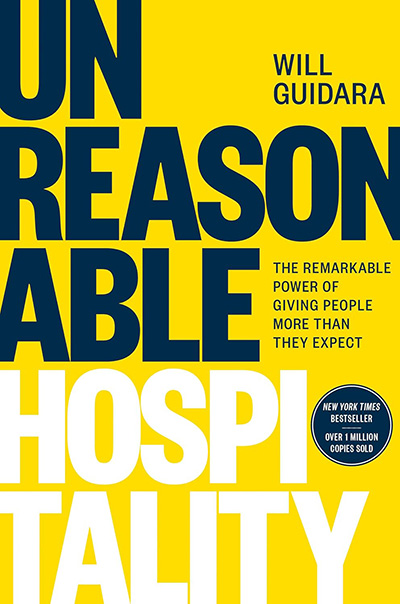
Although schools and restaurants serve different purposes, they have similarly nourishing goals: forging connections, orchestrating experiences, and filling other people’s cups. In Unreasonable Hospitality: The Remarkable Power of Giving People More Than They Expect, Will Guidara makes a powerful argument in favor of going above and beyond people’s expectations in order to create lasting bonds, glowing memories, and award-winning organizations. Due to his focus on being as hospitable as possible toward every person who worked at or came to eat at his restaurant, Eleven Madison Park in New York, Guidara helped EMP to move from fiftieth to first place in the world over the course of just a few years. He defines hospitality as something different from mere service: “Getting the right plate to the right person at the right table is service. But genuinely engaging with the person you’re serving, so you can make an authentic connection—that’s hospitality.” From the importance of paying attention, listening, slowing down to go fast, hiring mission-aligned employees, and being creative, to watching the bottom line, elevating the good work of others, re-doing what didn’t go well, and rallying teams together to celebrate, Guidara serves up a remarkable amount of practical wisdom for educators and school leaders who also do their best work when they put others first.

Submitted by
Jessica Flaxman, The Pingry School, Basking Ridge, NJ
Leadership Practice