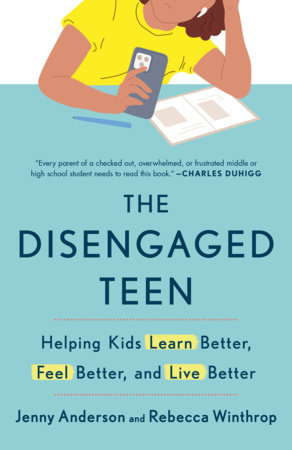
Education journalist Jenny Anderson and Brookings Institution researcher Rebecca Winthrop have produced an engaging, thought-provoking book that has much to offer educators and school leaders. Anderson and Winthrop mix journalistic anecdotes with a rich vein of data and analysis to explore why today’s teens are apathetic, undermotivated, and overwhelmed – and more importantly, what to do about it. Indeed, although the book touches on elements of the discourse about attention, phones, social media, and coping with the modern world, the authors are far more interested in developing a framework for cajoling today’s students out of their modern malaise. While some of the book is aimed at parents, the guidance is no less sage. Each student mode in its typology – “resistor,” “passenger,” “achiever,” and “explorer” – comes with its own descriptors and attendant behaviors. Of particular note are the gaps and overlaps between the various modes. For example, “resistor” behavior might overlap with some elements of “explorer” mode, and a student stuck in “passenger” mode might seem to be emerging only to get stuck in performative “achiever” mode. Truly, many independent school educators will recognize, with resignation, the authors’ description of “achiever” mode in which students “tie their self-worth… to high performance” at the expense of real learning and growth. Rather than blaming students, however, Anderson and Winthrop ask what adults can do differently, specifically how we can design for more meaningful, actionable learning. In a moment when there is so much despair in the field of education, The Disengaged Teen might just be the book to offer a blueprint for schools and teachers.