


Cats in Hats
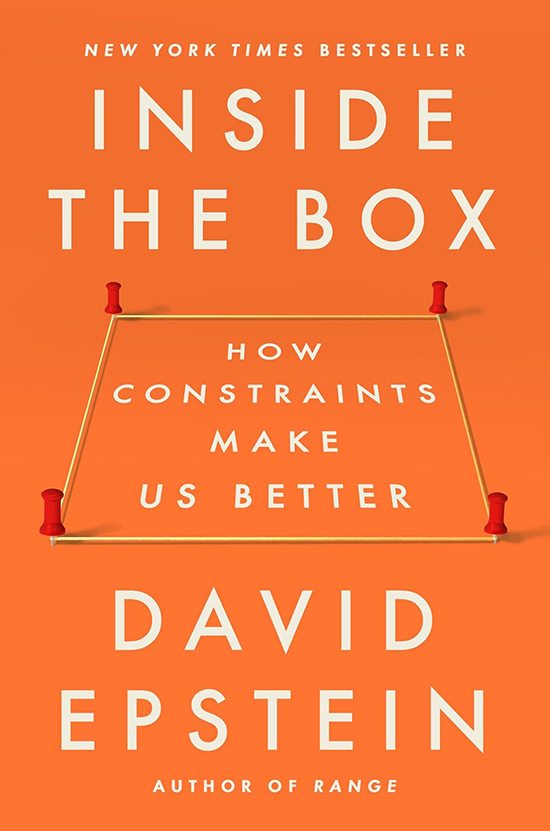
Inside the Box: How Constraints Make Us Better by David Epstein
Riverhead Books, May 26, 2026
The spark of David Epstein’s new book Inside the Box, is seeing how many different kinds of limits can help us be more productive, imaginative, and efficient. Epstein contrasts many examples such as the spectacular failure of General Magic, the visionary start-up that foresaw the iPhone years ahead of its time but crashed and burned due to the lack of parameters. Unlimited freedom, money, and time contributed to a lack of structure and cohesion. In a contrasting example, Epstein cites Pixar, who set up clear work structures and limitations that enabled them to create the first computer animated feature film. Epstein goes on to detail how other kinds of limits can profoundly influence ones’ work for the better. He documents Isabel Allende’s writing routine where she works in an empty room and starts all her books on the same calendar day of the year. Bach’s self-imposed composed constraints allowed him to become one of the most important musicians in history. Dr. Seuss created The Cat in the Hat by working with a limited list of words. Epstein’s message is that we can all find ways to create a box to work within. Teachers can support students by setting clear parameters which in turn limit obstacles that increase cognitive load. The examples go on and on and Epstein weaves them together by giving himself constraints in how he organized the book: Four parts documenting different perspectives on setting limits each with three chapters supporting the theme. While the basic premise of Epstein’s book makes intuitive sense, his masterful storytelling and eye-opening lenses allow you to rethink the benefit of not having absolute freedom.
